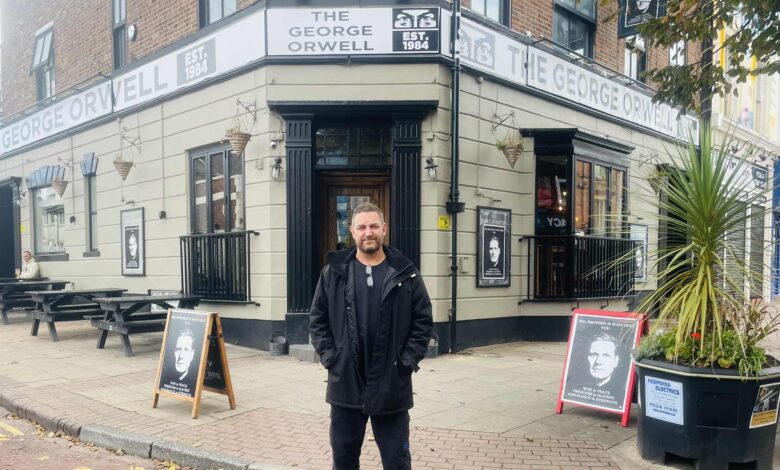
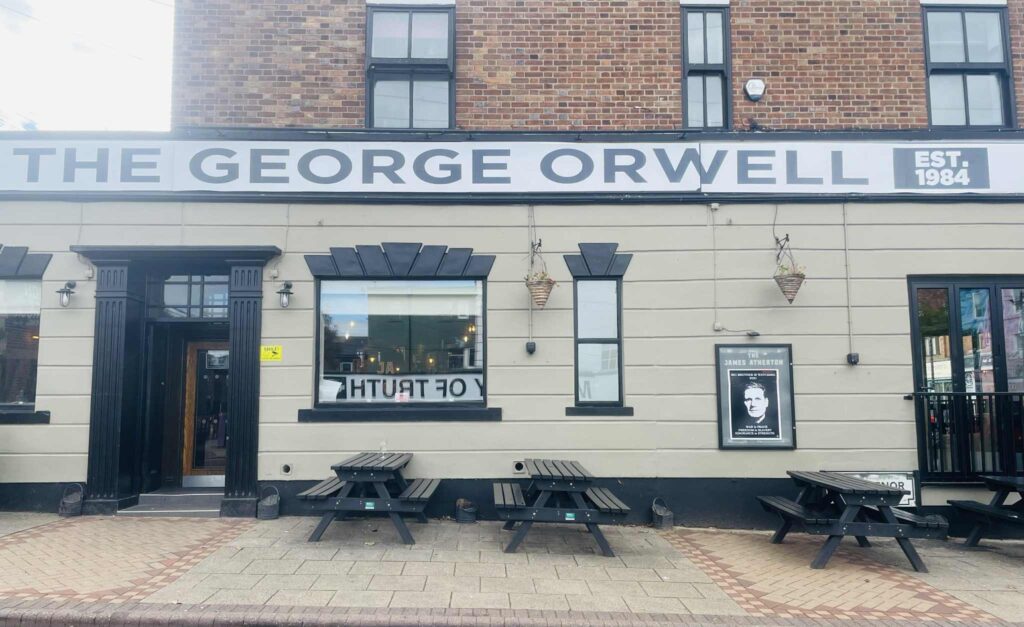
New Brighton is once again making headlines as local entrepreneur Daniel Davies takes a stand against the proposed introduction of mandatory digital ID in the UK. With help from the local community, he has changed the name of his pub, The James Atherton, to The George Orwell — in a nod to the author’s dystopian novel about the control of society.
Davies, the man behind the regeneration of New Brighton’s Victoria Quarter, has a history of making bold political statements through his venues and through art. In 2020, he captured national attention by renaming The James Atherton as The Three B*llends, as a response to the government’s Covid lockdown policies. The stunt went viral and is still talked about in the Wirral seaside town.
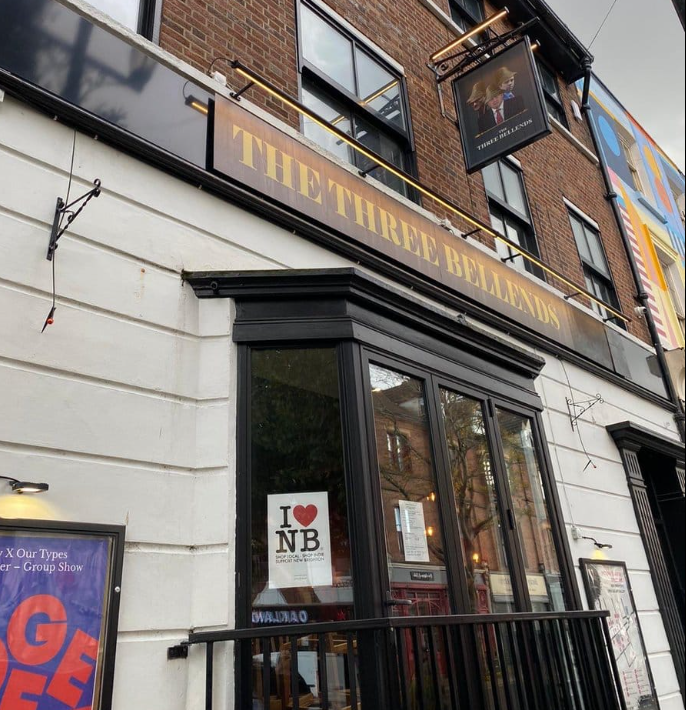
Now, Davies has turned his focus to the government’s renewed interest in digital ID. On Friday, 26 September, he unveiled a new name for The James Atherton: The George Orwell. The renaming has once again transformed the pub into a powerful symbol of resistance against what critics argue is a step toward a surveillance state and there has also been projections on display in the area.
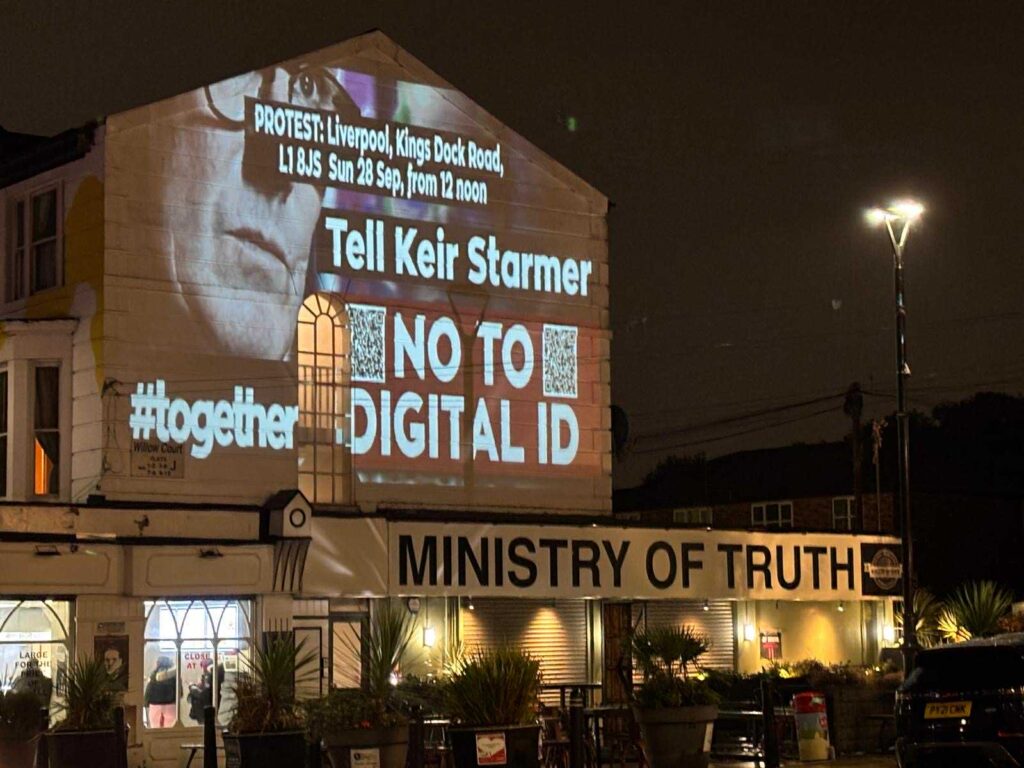
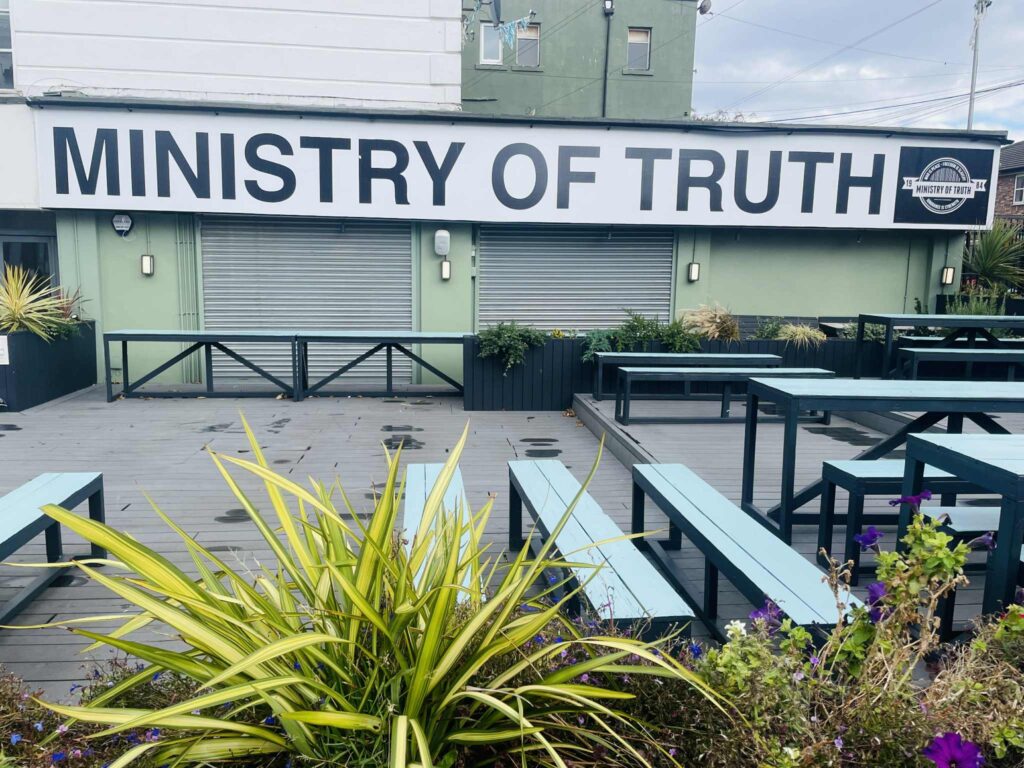
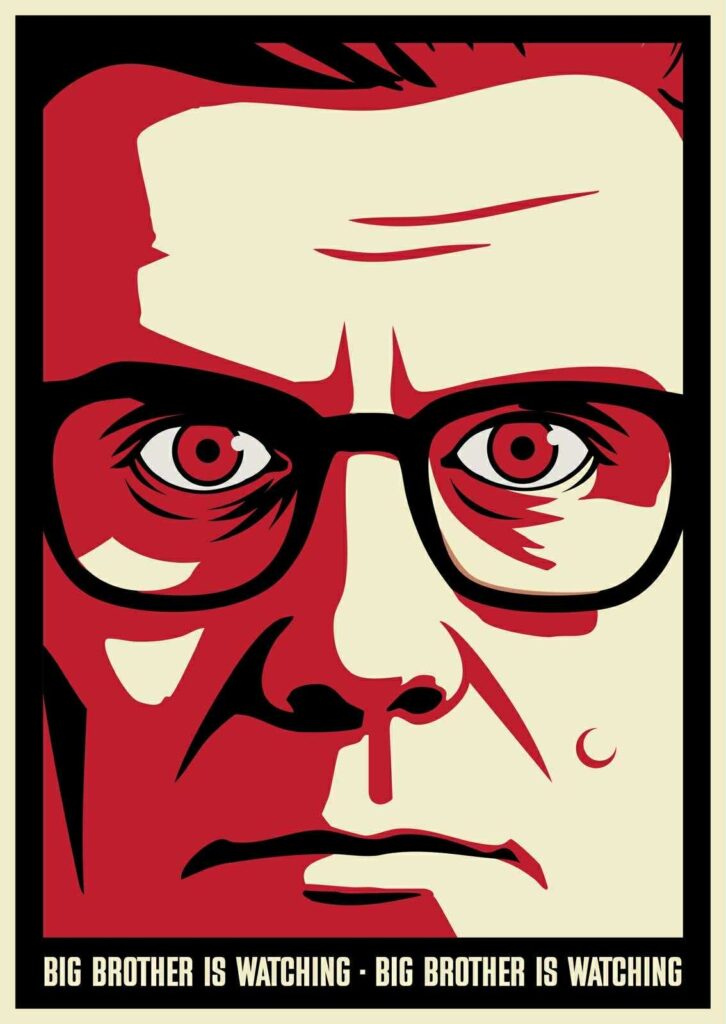
Davies has also renamed other Victoria Road buildings The Ministry of Truth and The Ministry of Love –direct references to Orwell’s novel, 1984, underlining his warning that digital IDs represent a dangerous move towards authoritarian control. His latest move has become the talk of the town — with people sharing photographs of them on social media.
The timing of the unveiling was no coincidence. It came just before a weekend of protests: on Saturday 27th September, campaigners rallied in Liverpool against digital ID, and on Sunday 28th September, the Farmers to Action #TrailerOfTruth campaign culminated in Liverpool with a mass protest and rally at the start of the Labour Party Conference.
The New Brighton activity and the Liverpool protests are backed by the Together Association, the grassroots campaign group that famously delivered 360,000 signatures to Downing Street in 2021, successfully stopping the rollout of vaccine passports. Their message is direct:
- No to Digital ID!
- Yes to a Digital Bill of Rights!
Alan Miller, co-founder of Together, said: “We shall not let the Prime Minister weaponize his political problems to impose a Biometric State Surveillance System on us all. That is not the British way. We call on all the public to make their voices heard. We say No to Digital ID.”
Critics argue that compulsory digital IDs:
- Were not in Labour’s 2025 election manifesto, and were explicitly ruled out by Home Secretary Yvette Cooper.
- Are unlikely to curb illegal immigration, as countries with ID cards — such as Germany, France, and Italy — still see higher levels of unauthorised entries than the UK.
- Would not stop “health tourism,” since NHS access rules are set by law, not by technology.
- Risk creating a permanent digitally excluded underclass, with over 10 million people in the UK lacking basic digital skills.
- Pose major privacy and data security concerns, especially given recent high-profile breaches like the Electoral Commission hack compromising 40 million voter records.

Opponents also point to the risk of “mission creep,” citing the vaccine passport era as evidence of how quickly digital ID systems can be extended to control access to everyday life. For New Brighton residents, the renaming of pubs and venues is more than a publicity stunt — it’s part of a wider cultural and political pushback.
Daniel Davies has transformed the area into a creative hotspot — with street art an integral part of its charm. Speaking of the latest changes, he said: “This is about waking people up. We don’t want a future where every part of our lives is monitored and controlled. That’s not freedom — that’s Orwell.”
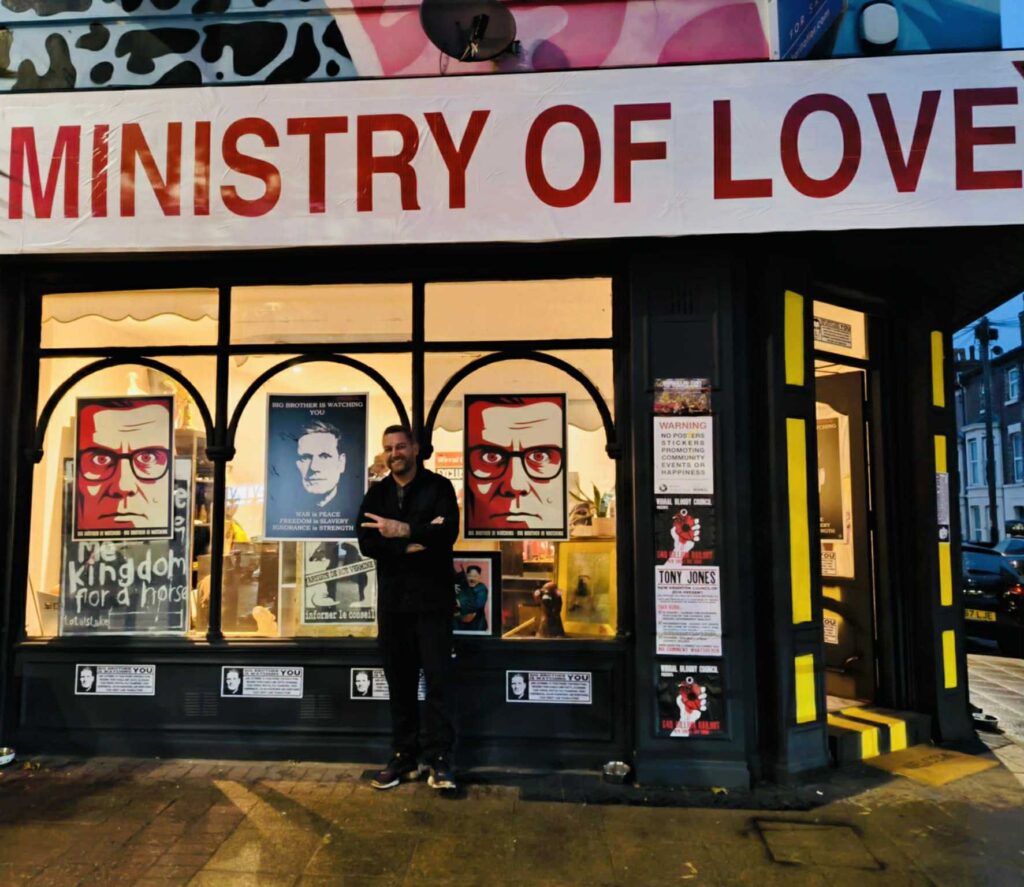
The signs on Victoria Road are already drawing attention, sparking debates in the community and online about civil liberties, government overreach and the future of Britain in the digital age. With pubs renamed, convoys rolling and tens of thousands of campaigners mobilising, New Brighton and Liverpool have become the focal point of the UK’s growing resistance to digital ID.
With pubs renamed, convoys rolling and tens of thousands of campaigners mobilising, New Brighton and Liverpool have become the focal point of the UK’s growing resistance to digital ID. As the subject is talked about more by the wider community, it’s likely that many in Merseyside will not comply.