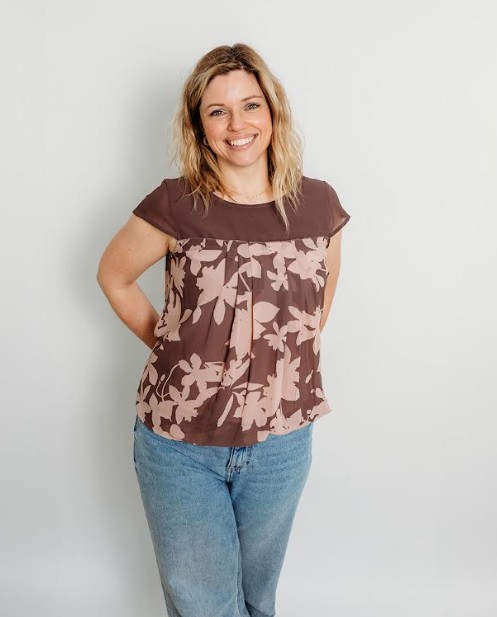
A business coach from Cornwall is on a mission to raise awareness of chronic illness. Mother of two Laura Fox has been battling debilitating illnesses for years and now helps other women with chronic illnesses create a life that works for them.
Over 10 million people in the UK are living with a hidden disability. That is around 80% of all disabled people in this country, and the number has been rising steadily for over a decade. That is millions of people going to work, dropping their children at school, sitting across from you at dinner, managing pain and medication and hospital appointments and fatigue. And you would never know.
This is the scale of invisible chronic illness. And it is a situation that, despite its prevalence, remains profoundly misunderstood, minimised and, in many cases, actively discriminated against. Laura Fox knows this better than most. The Cornwall based business coach and former secondary school teacher has lived with not one but two chronic health conditions for most of her adult life.
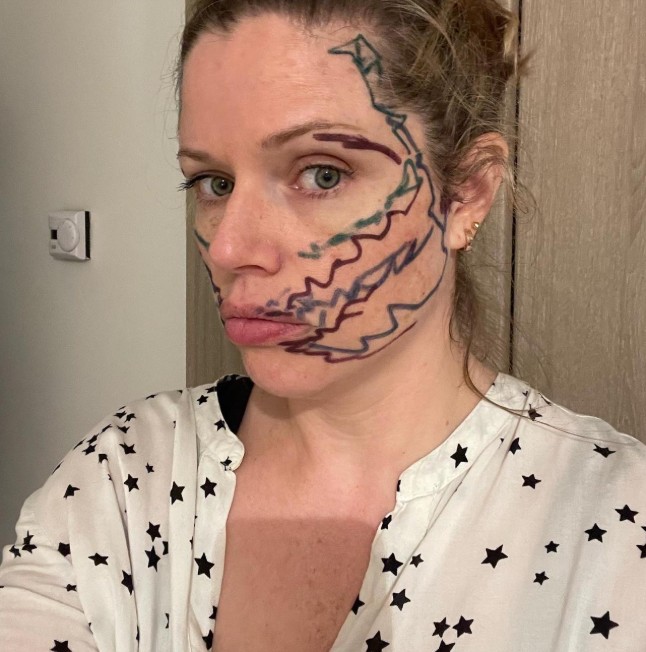
She was diagnosed with Crohn’s disease in 2009 and since November 2019, chronic bilateral facial pain, caused by a virus that attacked the nerves in her face and never fully let go. “There is a fundamental lack of understanding about what life with a disability is actually like, whether that be invisible or visible,” she says. “People believe we have equality in this country. But we don’t.”

The Morning Nobody Sees
Every morning, Laura wakes up twenty minutes before she needs to. Not to enjoy a quiet cup of tea. She wakes up early so she can take her medication. Because without it, the pain across both sides of her face makes it hard to function.
“My face feels like a deep, relentless ache through my cheeks, my teeth, my top and bottom jaw,” she explains. “My throat can feel like it’s closing. My tongue feels fatter. My ears hurt. After about fifteen minutes, the tablets kick in and I feel more normal. That’s just how every single day starts.”
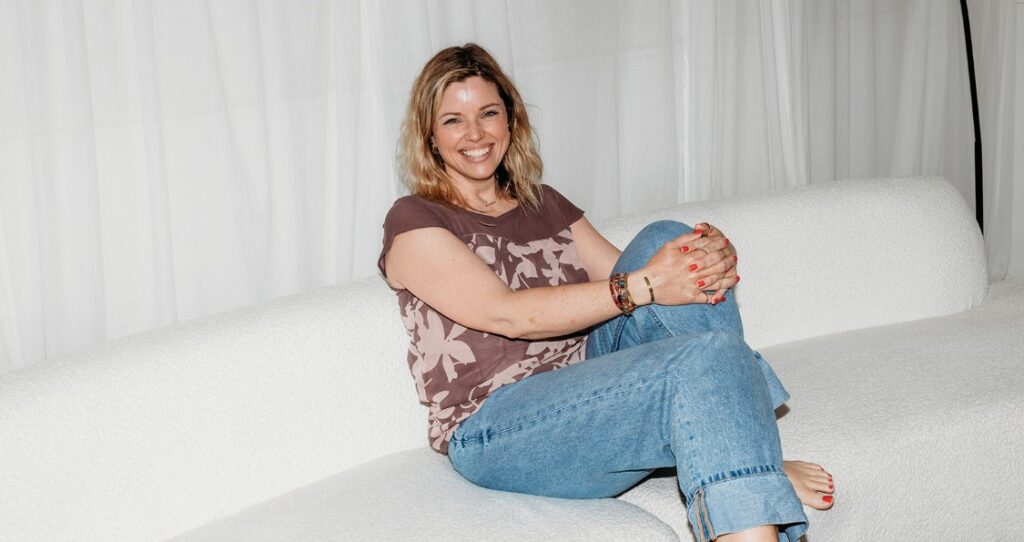
Behind the smile that most people see, Laura is managing a reality that most people couldn’t begin to imagine. A carefully organised pot of tablets taken at precise intervals throughout the day. A strict dairy and gluten free diet, plus supplements that run to hundreds of pounds every couple of months. Hospital visits and GP appointments at least once a month.
An early bedtime every single night, not as a luxury but as a necessity, because two late nights in a row can leave her exhausted and in significantly increased pain for up to a week. Even a routine trip to the dentist means writing off the whole day afterwards. “They don’t really understand my facial pain even when I tell them about it,” she says. “I need to recover for the rest of the day. Every time.”
And then there are the things invisible illness steals that nobody talks about. The small, ordinary, joyful things. “It hurts to smile for too long,” she says quietly. “It hurts to sing for too long.” Singing around the house, in the car, with her daughters, is one of the things that brings Laura the most joy. At her worst, she couldn’t open her mouth wide enough to get more than a couple of words out before the pain forced her to stop.
“It may seem like a small thing to some people, but for me the idea that I might not be able to sing anymore was pretty devastating,” she admits. “I was even afraid to say it out loud in case it became true.” This is what invisible illness does. It doesn’t just affect your ability to work. It reaches into every corner of your life.
The Moment Nobody Talks About
Nearly 60% of people with chronic health conditions routinely downplay their symptoms to avoid making other people feel uncomfortable. Laura understands why. She has Crohn’s disease, a condition affecting the digestive system that can cause sudden, urgent and completely uncontrollable episodes. She has learned to navigate this largely in silence, because explaining herself to strangers feels even harder than the condition itself.
She describes sitting in the school car park with her daughter, waiting for the gates to open, desperately needing the toilet and having nowhere to go. Not feeling able to walk into the school and ask to use the facilities. The quiet, constant, low-level anxiety of never quite knowing when her body might let her down in public.
And then there was a train journey in London. “It comes on so urgently, you have no idea,” she says. “We got to the station and I was desperate. There was one toilet on the platform, someone went in just before me. We went up to the floor above. There was a disabled toilet, a huge queue outside the women’s, and a man in a wheelchair came up right behind me.”
She let him go in ahead of her. “I thought I was going to have an accident,” she says. “But I let him go. Because I didn’t feel like my need was as visible or as valid as his, and because I was worried about what people would think seeing someone who looks perfectly fine walking out of a disabled toilet.” She waited. She only just made it.
“Even now, if I use a disabled toilet and someone is waiting when I come out, I feel like I have to explain myself. Like I owe them a justification for being there. That feeling never really goes away.” She tells of the first time she saw a sign on a Tesco disabled toilet that read: not all disabilities are visible. “I was honestly a bit emotional,” she admits. “And in a bit of disbelief that someone had thought to say that. But even with this, I still lack the confidence to just go in when there is a queue. I never use it when there is no queue.”
This is the world people with invisible illness navigate every day. Not just the physical reality of their condition. But the constant, exhausting work of feeling like they have to justify their own existence within it.
“You Start To Question Yourself”
For years, Laura went from doctor to doctor unable to get a diagnosis for her facial pain. Her condition, now known as chronic bilateral facial pain, was for a long time referred to in medical literature as “atypical facial pain”, with the devastating implication that it was psychological rather than physical. That somehow the patient was the problem.
“You mask,” she says about how she approaches everyday life. “You have to be able to get through the day. So you smile and you push through. And then, because you are smiling, people start to doubt you. People start to question your character because they think you are lying. When doctor after doctor can’t find anything wrong and basically implies it’s all in your head, you start to believe them. You start thinking, is it actually real? Does it actually hurt? Am I making this up?”
Research shows that 43% of people with chronic conditions report needing to advocate for themselves in healthcare settings because their condition is misunderstood or minimised. Laura is one of millions. In 2021 her mental health, already stretched, began to collapse. And with no diagnosis, there was no support. No signposting, no referrals, no acknowledgement that she was struggling. Just a woman in pain, trying to keep going, quietly falling apart.
“You lose confidence,” she says. “You get stuck in a cycle that is so hard to get out of. And somehow, in the middle of all of that, you have to find the mental strength to research your own condition, keep fighting, try to get referred to someone who can actually help you and advocate for yourself. All while being in pain. All while trying to hold your life together.”
The Workplace: Where Invisible Illness Becomes Visible Injustice
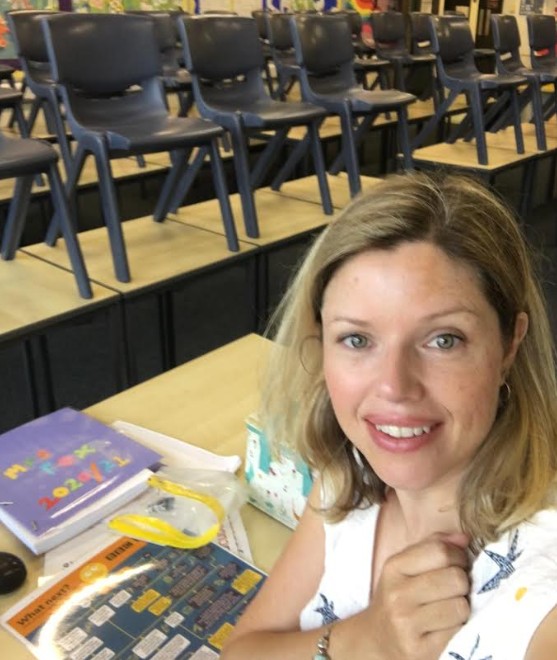
Laura was a secondary school maths teacher for 18 years. By every measure, she was excellent at her job. Dedicated, hardworking, well regarded. She managed her Crohn’s disease largely around her career, fitting appointments into days off, pushing through when she needed to. Then in 2019 her facial pain began and everything changed.
At a time when she was desperately ill, had no diagnosis and was in daily pain, she found herself facing a level of institutional coldness that she could never have anticipated. “I had given everything,” she says, and her voice is very steady in the way that voices get when someone has had a long time to make peace with something that still hurts.
“I was ill. I didn’t know what was wrong with me. I was in pain. And instead of support, I felt like I had just become a problem to be managed. My mental health took such a deep dive.” She is not alone in this experience. Half of workers with invisible disabilities say that difficulty getting support at work makes it not worth it. Two thirds say they feel it is entirely up to them to arrange their own support and reasonable adjustments.
Disability discrimination claims have surged by 30% in recent years and now make up a quarter of all claims referred to ACAS for conciliation. At a subsequent employer, Laura asked to reduce her hours. Not to take on other work. Not because she was any less committed. But because managing two chronic health conditions, the prescriptions, the appointments, the constant juggling, had become so relentless that she needed to reduce her stress levels just to keep functioning.
What followed was one of the worst professional experiences of her life. “He accused me of working for someone else,” she says quietly. “That was where his head went. Not to my health. Not to trying to understand what I was dealing with. He talked over me and told me he knew exactly what kind of person I was. That he had my number.” She pauses. “I thought, what’s the point. He’s not going to listen. He’s already made his mind up. I have never been spoken to like that in my life, it was shocking and devastating.”
That was her last day. This is ableism in its rawest form. Not just the prejudice of assuming that someone with a health condition is less capable or less committed, but the willingness to attack their character rather than take the time to understand their reality. She was trying to make it work. She was trying to keep contributing. And instead of being met with even the most basic level of understanding, she was accused of being dishonest.
“It feels like there is very little effort from employers to train management in how to support people with chronic health conditions,” she says. “No awareness, no flexibility, no willingness to learn. We are limited through no fault of our own in how much we can work, and instead of being supported, we get looked at as less. We are not always bed ridden, we can look like we are fine. But what we are managing is relentless, we don’t get a day off and that is exhausting in itself. There is a huge gap in comprehension here. And the fact is, it can happen to anyone at any time.”
What She Wants You To Know
Laura is not telling this story for sympathy. She is telling it because she knows, with absolute certainty, that she is not alone. And because she believes that until people start talking about this honestly, nothing will change. She wants employers to listen. She wants the medical profession to do better. She wants the general public to understand that the person who just walked out of the disabled toilet, the person who looks absolutely fine, the person smiling at you from across the room, might be going through something you cannot see and cannot imagine.
And she wants anyone who has been dismissed, disbelieved or made to feel like a burden to hear this: “I am so sorry that this has happened to you. It is incredibly difficult and exhausting. Being swept aside or having your illness minimised is awful. But you are not making it up. You are not damaged goods. You are fighting every single day and that takes a kind of bravery that most people will never understand.”
Building Something Beautiful Anyway
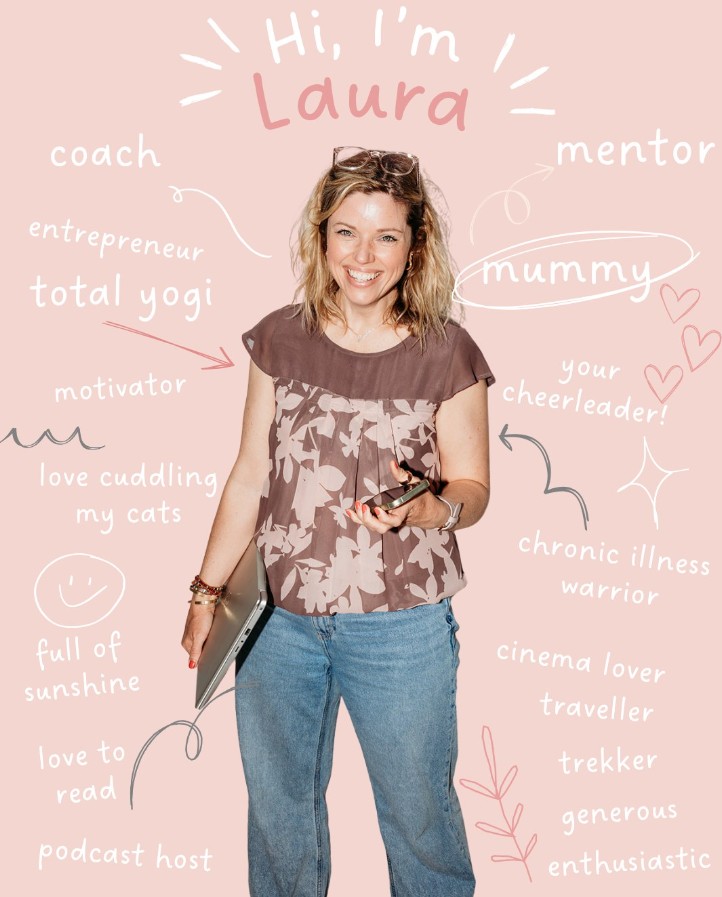
In 2022, Laura left teaching. In 2023, she finally found a doctor who listened and helped her manage her pain. And slowly, the life she had always dreamed of began to take shape, built entirely around her health, her energy, her two daughters and her own terms. She now runs her own business – i am Laura, helping women just like her get out of the work place.
Your Hours. Your Rules., is her signature coaching programme for women with chronic health conditions who are ambitious, who still have dreams, and who are done working on everyone else’s schedule. She also hosts the i am Laura podcast and runs the Chronic Illness Biz Club, a community of women who, as she puts it, “just get it.”
She has been named a finalist for the Diversity Champion award at the Womanifest Awards 2025, and nominated for the West Country Women Awards in both 2025 and 2026. But perhaps more importantly than any of that, she can sing again. “There is magic in you,” she says, and she means every word of it. “Even on the really hard days. I genuinely believe that.”
To find out more about Laura Fox and her work visit her WEBSITE or book a free chat HERE
Laura hosts the i am Laura podcast – Juggling Chronic Illness, Kids, a Job and a Dream, available on all major platforms.